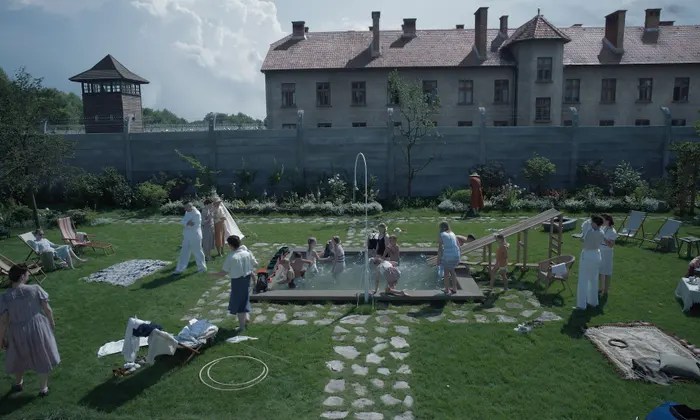
The Zone of Interest (2023) is listed on wikipedia as a historical drama based on the novel by Martin Amis of the same name. It is most certainly populated by historical figures, focusing on the lives of the SS Rudolph and Hedwig Höss. The performances of the actors, primarily Christian Friedel as Rudolf Höss and Sandra Hüller as Hedwig Höss, are all superb. There is a sense that each actor knows how unique and important the story they are telling. The movie is set in the Höss residence, for the most part. It moves for a while, but its main focus is always the singular zone in or around the lives of the Höss family by the death camp. It focuses on the Höss relationship, truly a marriage like few others. Hedwig refuses to leave the house after Rudy get a transfer that turns out to be temporary. When one lives next to the zone of interest, the wall seperating life from Auschwitz, life is unlike anything one could imagine. So Glazer and Amis reimagine it for us. Instead of a home life of loving warmth and nurture, we see scenes of another family life. Yes, it is ostensibly warm and caring and filled with the artifacts of familial affection, but there is more, so much our hearts might explode with sickening grief and utter revulsion. We see Rudolph coming home from a day of mass murder to have a a servant wash the blood and gore off his boots that he has left outside the house. We see Hedwig admiring an ermine coat that was stolen from a dead holocaust victim. We see Rudolph reading stories to the children at night as a heroic servant girl sneaks food for the prisoners. We see the Höss family on fishing trips as the river floods with bones and ash. We see Hedwig’s mother warmly visiting and then hurriedly departing after seeing the crematoria burning human flesh and bones at night. We see visitors sitting out in the sun as the camera pans over the structure of Auschwitz. We see the guests enjoying the fruits of the garden as we celebrate Obersturmbannführer Rudolf Höss’ birthday. We see the sons of Höss and Hedwig examining gold teeth before dropping off to sleep. And this is where the horror emerges. We see friends aound the table at tea discussing diamonds stolen from victims of the holocaust. We hear the horrifying cries and terrifying echoes from over the wall as the gardeners, themselves hostages to the fascist regime, fertilize the soil with human ash. We see a little boy as he plays with toys in his room as someone is drowned for arguing over an apple. food is scarce near the zone of interest. We see he is well fed and safe. We gaze at various flowers as the screams of suffering vary by way of counterpoint. We are all the time listening to the sound of gunfire, shouts, screams, and angry orders. These sounds are left up to the imagination. The engine of death is seemingly never ending. It is cold, efficent, industrialized, backed by an efficent bureaucracy and made by engineers who know their job well. We even see them meeting to discuss proudly thie latest creations. And then there are all these flowers, petals of torture. There are so many flowers as there are many ways to die in exquisite pain. Yes, the Zone of Interest is a movie based on events. Höss, Hedwig and their five children lived there. But in the hands of Johnathan Glazer our zone of interest is keenly focused. We are led into the gates of hell, the dark heart of humanity, the place of hate and prejudice, the place where there is no peace only an eternal cycle of torture and suffering and the most unbelievable dehumanising expiration of ordinary innocent people like you and like me. Glazers’ movie (based on Amis’s writing) is as unforgettable as every image and metaphor, layer after layer, is tattooed on our souls. This is a masterpiece for our time and I am not embarassed to say it devastated me for days afterwards. Glazer builds layer upon layer of metaphor and image until near the end, the suffering of Höss’s million plus victims is captured in one unforgettable moment. It is this: Just at the end we see cleaners at work, cleaning and tidying the Auswitch museum in contemporary moments. We feel its vast silence, its sorrow, its darkness, its terrible exhibits of shoes and crutches and suitcases, the leftovers from The Departed. Yes indeed, the Zone of Interest is historical. Its power lies in the fact this actually happened, not too long ago, and that the power of cinema reimagines these events in brilliant detail – a beautiful visual poem of pure horror and pointless mass death based on an mistaken view of white supremacy and bogus theories of racial purity.
 oranryan.blog